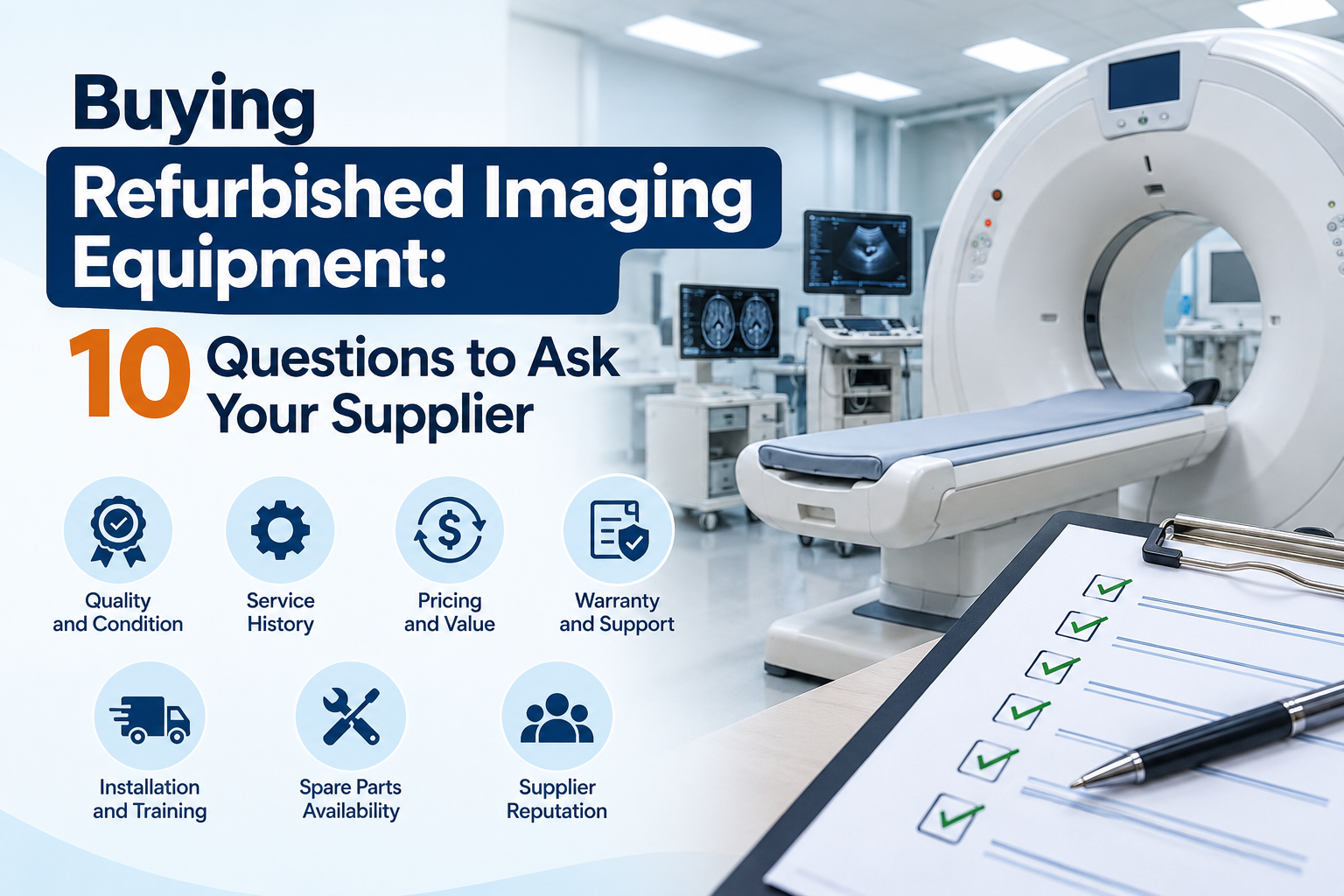
Buying Refurbished Imaging Equipment: 10 Questions to Ask Your Supplier
Purchasing medical imaging equipment is a significant investment for hospitals, diagnostic centres and healthcare providers. While new systems offer access to the latest technology, refurbished medical imaging equipment can be a practical alternative for facilities looking to expand diagnostic capabilities while managing capital expenditure.
However, the value of a refurbished CT scanner, MRI machine or Cath Lab depends on more than its purchase price. Equipment condition, refurbishment quality, system configuration, installation requirements and long-term service support all influence the success of the investment.
The challenge is that the term refurbished can describe different levels of inspection, repair and restoration. Buyers need to understand exactly what they are purchasing and what support they can expect after installation.
Before committing to a purchase, ask your supplier these ten questions to help assess the equipment, understand the total investment and make a more informed decision.
1. What Is the Equipment's Age and Service History?
The manufacturing year is an important starting point, but it does not tell you everything about a system's condition or remaining useful life. Two imaging systems of the same age can have very different maintenance histories, usage levels and component conditions.
Ask the supplier for the equipment's manufacturing year, original installation date, available operating or usage records, maintenance history and details of major repairs. Where applicable, enquire about previous upgrades and the replacement history of critical components.
For a CT scanner, the condition and usage history of the X-ray tube and detector system deserve particular attention. For an MRI machine, ask about the magnet, gradient system, radiofrequency components and any major repairs or service interventions.
Also confirm the exact model, software version, configuration and available options. These details can affect clinical suitability, compatibility with existing infrastructure and future maintenance requirements.
What to look for: A supplier who provides available records, explains gaps in the service history and clearly identifies the equipment being offered.
2. What Does the Refurbishment Process Include?
Not all refurbished medical equipment undergoes the same level of work. One system may receive basic servicing and cleaning, while another may undergo detailed inspection, component-level repairs, replacement of selected parts and comprehensive performance testing.
Ask your supplier to explain the refurbishment process step by step. Find out which components were inspected, which parts were repaired or replaced, what software or hardware upgrades were performed and what limitations, if any, remain.
Request a written refurbishment report specific to the equipment you intend to buy. It should describe the work completed and identify relevant replacement components, outstanding issues and the tests performed after refurbishment.
It is also useful to establish whether the refurbishment was carried out by the supplier's own technical team or an external service provider, and who will be responsible for subsequent support.
What to look for: Documented refurbishment work, traceable equipment identification and a clear explanation of the system's condition, not just a general assurance that the equipment has been refurbished.
3. Has the Equipment Undergone Performance Testing?
An imaging system must perform reliably under its intended operating conditions. Before purchasing refurbished imaging equipment, establish what technical checks and performance tests have been completed and whether the results meet defined acceptance criteria.
For CT scanners, relevant checks may include image quality, detector performance, X-ray tube condition, system calibration and applicable radiation safety and quality assurance tests.
For MRI systems, ask about image quality, magnet performance, gradient and radiofrequency systems, available coils, system calibration and the results of relevant safety and performance checks.
The specific tests required will depend on the equipment model, its configuration and the intended clinical use. Ask for the available test reports and clarify whether the system will undergo final acceptance testing after installation.
Where appropriate, arrange an independent inspection by a qualified medical equipment engineer before accepting the equipment.
What to look for: System-specific test documentation, clearly defined acceptance criteria and a process for resolving any failures or discrepancies before final acceptance.
4. What Warranty Coverage Do You Provide?
Warranty coverage can significantly affect the financial risk associated with buying refurbished medical imaging equipment. Coverage varies by supplier, equipment model, system condition and the terms of the sale.
Ask how long the warranty lasts and when it begins. Clarify whether it covers parts, labour, service visits and travel, and whether there are limits on the value or number of claims.
Pay particular attention to exclusions involving high-value components. For example, ask specifically about the coverage applicable to CT X-ray tubes and major MRI system components rather than assuming that all components are included.
You should also understand the procedure for reporting a fault, the expected response time, the geographical scope of support and the circumstances that could invalidate the warranty.
Obtain the complete warranty terms in writing. If certain components are excluded, ask what repair or replacement options would be available if they fail.
What to look for: Clear written terms, realistic service commitments and a shared understanding of what the supplier will—and will not—cover.
5. Are Spare Parts and Technical Support Available?
Even a well-maintained imaging system may require repairs during its operating life. If spare parts are difficult to source or qualified engineers are unavailable, a relatively small fault can result in prolonged downtime.
Before purchasing, ask whether the supplier can support the specific make and model. Confirm the availability of compatible spare parts, access to technical documentation, engineer expertise and support for troubleshooting and repairs.
For older systems, establish whether the original manufacturer continues to support the model and whether key components, software options and replacement parts remain available. Where original parts are no longer available, ask about suitable alternatives and their compatibility.
Geography matters, too. If the equipment will be installed away from the supplier's main service locations, clarify how remote assistance, on-site visits and parts delivery will be handled.
A supplier with broader medical equipment service capabilities may also help you plan maintenance beyond the initial warranty period.
What to look for: A credible support plan for the specific system, including parts sourcing, technical expertise and practical arrangements for managing downtime.
6. What Is the Total Cost of Ownership?
The purchase price is only one part of the cost of acquiring medical imaging equipment. Installation, transportation, site preparation, maintenance and future repairs can materially change the economics of the investment.
Request a detailed quotation that separates the equipment price from additional costs. Depending on the system, these may include:
Transportation, insurance and handling.
Installation, commissioning and acceptance testing.
Electrical, cooling and other infrastructure requirements.
MRI room preparation, shielding and applicable safety provisions.
CT room preparation and radiation protection requirements.
Software licences, options and accessories.
Staff training, preventive maintenance and future repairs.
Ask which costs are included in the supplier's offer and which will be your responsibility. For imported equipment, clarify the applicable freight, customs, taxes and local delivery costs.
Then compare the expected cost of ownership over a realistic operating period with the cost of a new system. Consider not only acquisition costs but also maintenance expenditure, parts availability, potential downtime and the clinical requirements of your facility.
What to look for: A transparent breakdown of the complete investment, allowing you to compare options on a like-for-like basis rather than on purchase price alone.
7. Does the Equipment Meet Applicable Regulatory Requirements?
Medical imaging equipment must comply with the regulatory, safety and quality requirements applicable to its destination and intended use. Requirements can vary by equipment category, model, country and transaction.
If you are purchasing equipment for use in India, confirm the applicable requirements before placing an order. Depending on the equipment and circumstances, these may involve import permissions, applicable medical device regulatory requirements, radiation safety approvals and installation-related compliance.
For CT systems, verify the applicable radiation safety, installation and quality assurance requirements, including any relevant approvals involving the Atomic Energy Regulatory Board (AERB). MRI installations require appropriate magnetic-field safety arrangements and compliance with applicable electrical and other safety requirements.
Ask the supplier to provide available equipment identification records, technical documentation, test reports and relevant conformity or approval documents. Independently verify any approvals or permissions required for the proposed transaction and installation.
Do not assume that equipment previously operated in another country is automatically eligible for import or use in India.
What to look for: Appropriate documentation and a clear understanding of who is responsible for meeting the applicable requirements before the equipment is commissioned.
8. Will Installation, Commissioning and Training Be Included?
The successful purchase of a refurbished imaging system does not end with delivery. Correct installation, commissioning and handover are essential to establishing that the equipment is ready for its intended use.
Confirm whether the supplier will manage transportation, installation, system configuration, commissioning and final acceptance testing. Ask what infrastructure must be ready before the equipment arrives and who will coordinate any required site modifications.
For MRI systems, site readiness may involve room dimensions, magnetic-field safety arrangements, shielding and other model-specific infrastructure. CT installations may require appropriate electrical capacity, cooling, radiation protection and related facility preparations.
Establish whether operator training and technical familiarisation are included, who will provide them and what documentation will be supplied at handover.
The agreement should identify the responsibilities of the supplier and buyer, the installation timeline, acceptance criteria and the procedure for resolving issues discovered during commissioning.
What to look for: A defined installation and handover plan, clear responsibilities and documented acceptance of the system against agreed requirements.
9. Can You Provide Relevant Customer References?
A supplier's experience with similar equipment can help you evaluate its technical capabilities and after-sales support.
Ask for references from hospitals, diagnostic centres or healthcare providers that have purchased comparable equipment. Where possible, speak to customers who have operated the same or a similar model for a meaningful period.
Ask about the quality of the equipment at delivery, installation and commissioning, the supplier's response to faults, parts availability and the experience of obtaining warranty support.
You should also enquire about the supplier's experience with your preferred manufacturer and equipment category. Experience with refurbished CT scanners, for example, does not automatically demonstrate the same level of expertise with MRI systems.
Customer references are useful, but they should complement—not replace—your own technical evaluation and verification of documentation.
What to look for: Relevant experience, credible references and evidence of ongoing technical support rather than claims based only on the number of systems sold.
10. What Are the Delivery Terms and Acceptance Conditions?
Before placing an order, make sure the purchase agreement clearly defines what will be delivered, when it will arrive and what happens if the equipment does not meet the agreed specifications.
Confirm the equipment model, serial number where available, configuration, software options, included coils or accessories and any other components specified in the quotation.
Clarify the delivery schedule, payment milestones, transportation arrangements, installation responsibilities and acceptance procedure. Establish who bears responsibility if the equipment is damaged in transit or arrives with missing components.
Most importantly, agree on what happens if the equipment fails the specified acceptance tests or differs materially from the contracted configuration. The agreement should define the applicable remedies, which may include corrective work, repair, replacement or other contractual solutions.
For international transactions, pay particular attention to shipping terms, insurance, export and import responsibilities, documentation and the allocation of costs.
Review the contract carefully before making an advance payment. Where the transaction is significant, obtain appropriate legal and technical advice.
What to look for: A written agreement that protects both parties by defining the equipment supplied, acceptance criteria, payment conditions and remedies for non-conformity.
Conclusion: Choose the Right Equipment and the Right Support Partner
Buying refurbished medical imaging equipment can help healthcare facilities manage capital expenditure while expanding diagnostic capacity. However, the success of the investment depends on the condition of the system, the quality of refurbishment, the suitability of the configuration and the support available throughout its operating life.
Before purchasing a refurbished CT scanner, MRI machine or Cath Lab, verify the service history, refurbishment documentation, performance test results, warranty terms, spare parts availability, installation requirements and regulatory compliance. Evaluate the total cost of ownership and agree on clear acceptance conditions before finalising the purchase.
The right supplier should offer more than a competitive equipment price. You need transparent documentation, relevant technical expertise and a practical plan for installation, maintenance and ongoing support.
Cyrix Healthcare helps healthcare providers explore refurbished imaging equipment through AURUM, alongside new CT and MRI solutions from ANKE and technical service capabilities that support equipment maintenance, repairs and lifecycle management.
Looking for a Refurbished CT Scanner, MRI Machine or Cath Lab?
Share your equipment requirements with Cyrix Healthcare to explore suitable options and discuss the technical support available for your investment.
 +91 9072522062