Cath Lab Equipment Maintenance: Common Technical Issues and Service Requirements
A cardiac catheterisation laboratory (Cath Lab) plays a critical role in diagnosing and treating cardiovascular conditions. Hospitals use cath lab systems to perform procedures such as coronary angiography, angioplasty, and other image-guided cardiac interventions. These procedures depend on accurate imaging, reliable equipment, and uninterrupted system performance.
Regular maintenance helps hospitals reduce equipment downtime, maintain image quality, and support patient safety. Understanding common technical issues and service requirements allows hospital administrators and biomedical engineering teams to identify problems early and arrange professional servicing when necessary.
What Is Cath Lab Equipment Maintenance?
Cath lab equipment maintenance involves inspecting, testing, servicing, and repairing the systems used during cardiac catheterisation procedures. A typical cath lab includes an X-ray imaging system, a C-arm or ceiling-mounted imaging assembly, a patient examination table, image processing units, monitors, control consoles, and associated electrical and software components.
Cath lab equipment maintenance includes preventive maintenance, corrective repairs, performance verification, and system troubleshooting. The exact maintenance requirements depend on the equipment manufacturer, model, operating conditions, and hospital maintenance policy. Hospitals should follow the manufacturer's service instructions and applicable radiation safety requirements when planning maintenance activities.
Common Technical Issues in Cath Lab Systems
Cath lab systems combine imaging technology, mechanical components, electronics, and specialised software. A fault in any of these areas can affect equipment performance or interrupt clinical procedures.
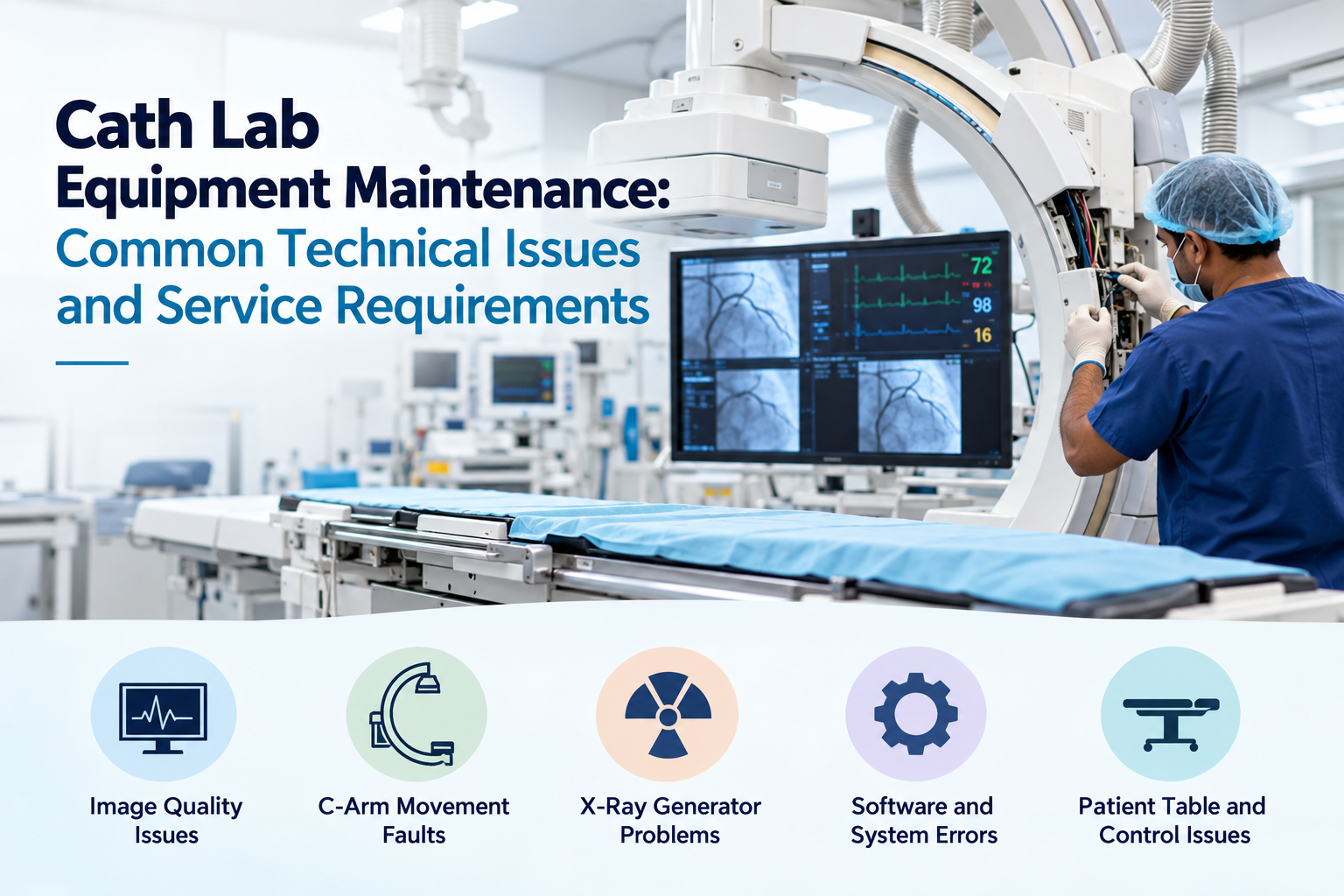
1. Image Quality Problems
Poor image quality is one of the common concerns in cath lab operations. Images may appear blurred, noisy, distorted, or less detailed than expected. These problems can affect the visibility of blood vessels and other anatomical structures during image-guided procedures.
Possible causes include detector-related faults, X-ray generator problems, incorrect imaging settings, calibration issues, and image processing errors.
Service requirements: Technicians should inspect the imaging chain, review system error logs, verify image processing settings, and perform the manufacturer-recommended image quality and calibration tests. Qualified personnel must also check radiation output and related safety parameters according to applicable requirements.
2. C-Arm Movement and Positioning Faults
The C-arm assembly allows clinicians to obtain images from different angles. Mechanical problems can affect its positioning, rotation, or movement during procedures.
Common symptoms include restricted movement, unusual noises, positioning errors, and faults in the movement control system. These issues may result from mechanical wear, drive system problems, sensor faults, or control-related failures.
Service requirements: A qualified service technician should inspect the mechanical assembly, movement mechanisms, positioning sensors, brakes, and associated control systems. The technician should verify that the system moves accurately and safely before returning it to clinical use.
3. X-Ray Generator and Exposure Problems
The X-ray generator provides the radiation required for fluoroscopy and image acquisition. Generator faults may cause exposure errors, system alarms, inconsistent imaging performance, or an inability to initiate imaging.
Potential causes include electrical faults, generator component failures, communication errors, and problems with exposure control circuits.
Service requirements: Cath lab system troubleshooting should include diagnostic checks of the generator, exposure control system, electrical connections, and relevant error codes. Radiation-related tests must be performed by appropriately qualified personnel using suitable equipment and established procedures.
4. Software and System Communication Errors
Modern cath lab systems depend on software to control imaging, process images, manage system functions, and communicate with hospital information systems. Software crashes, interface failures, and communication errors can interrupt normal operation.
Problems may involve outdated software, configuration issues, network connectivity, storage limitations, or hardware communication faults.
Service requirements: Technicians should review error logs, verify system configurations, check network connections, and assess compatibility with connected devices. Software updates should follow manufacturer guidance and the hospital's change-control procedures. Hospitals should also maintain appropriate data backups and cybersecurity controls.
5. Patient Table and Control Console Issues
The patient table must support accurate positioning and controlled movement. Faults involving table movement, height adjustment, foot controls, or control console responsiveness can delay procedures and create operational concerns.
Service requirements: Maintenance teams should inspect the table movement mechanism, electrical controls, position sensors, safety locks, and emergency stop functions where applicable. They should also verify that the control console responds correctly and that all required safety functions operate as intended.
Preventive Maintenance Requirements for Cath Lab Equipment
Preventive maintenance helps identify potential failures before they cause significant downtime. Hospitals should establish a maintenance schedule based on manufacturer recommendations, equipment usage, service history, and clinical requirements.
Important maintenance activities include:
Routine inspection: Check cables, connectors, mechanical assemblies, cooling systems, and visible signs of wear or damage.
Performance testing: Verify imaging quality, system functionality, positioning accuracy, and other manufacturer-specified parameters.
Electrical safety checks: Perform applicable electrical safety tests and inspect relevant power and grounding connections.
Software diagnostics: Review error logs, system alerts, configuration settings, and relevant software performance indicators.
Service documentation: Record maintenance dates, reported faults, replacement components, test results, and corrective actions.
Hospitals should also maintain a clear process for reporting equipment faults and removing unsafe equipment from clinical service.
Why Professional Cath Lab Repair Services Matter
Cath lab systems require specialised technical knowledge because they combine advanced imaging equipment, high-voltage components, mechanical assemblies, and software controls. General equipment servicing may not provide the diagnostic expertise required to identify complex faults.
Professional cath lab repair services Kerala can help healthcare facilities arrange technical inspections, fault diagnosis, corrective repairs, and performance verification. When selecting a service provider, hospitals should assess the technicians' qualifications, experience with the relevant equipment brand, access to suitable replacement parts, service documentation practices, and ability to coordinate with the manufacturer when necessary.
Hospitals searching for the best cath lab repair services in Kerala should prioritise technical competence, transparent service procedures, appropriate safety practices, and dependable support arrangements rather than relying on price alone.
A suitable service provider should explain the identified fault, recommended repair, expected downtime, and required verification tests. Where available, hospitals can also consider service agreements that define preventive maintenance schedules, response arrangements, and reporting requirements.
How to Reduce Cath Lab Equipment Downtime
Hospitals can reduce avoidable disruptions by combining preventive maintenance with effective equipment management.
First, train clinical and technical staff to recognise warning messages, abnormal noises, image quality changes, and movement irregularities. Second, maintain an accurate equipment service history to identify recurring faults. Third, coordinate preventive maintenance with clinical schedules to minimise disruption. Finally, establish a clear escalation process for critical failures and ensure that only appropriately qualified personnel perform repairs.
Avoid repeated resets or unauthorised adjustments when a fault affects imaging, movement, or safety. Document the problem and contact an authorised or appropriately qualified service provider.
Conclusion
Reliable cath lab performance depends on regular maintenance, timely troubleshooting, and technically sound repairs. Image quality issues, C-arm movement faults, generator problems, software errors, and patient table failures can affect clinical operations if hospitals do not address them promptly.
By following manufacturer-recommended maintenance procedures and working with qualified specialists, healthcare facilities can improve equipment reliability, manage downtime, and maintain appropriate safety standards. Choosing experienced cath lab repair services Kerala like Cyrix Care 360, also helps hospitals establish a structured approach to servicing complex cardiac imaging systems.
For hospitals planning maintenance or experiencing equipment faults, a documented service assessment is a practical first step towards identifying the problem and determining the appropriate corrective action.
 +91 9072522062